
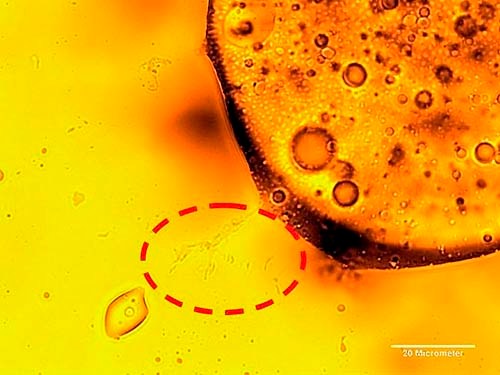
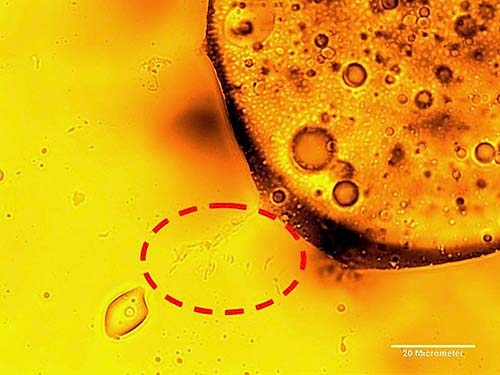
 In this undated image provide by the journal Science, microbes degrade oil, indicated by the circle of dashes, in the deepwater plume from the BP oil spill in the Gulf, as documented in a study by Berkeley Lab researchers. The newly discovered type of oil-eating microbe, which is suddenly flourishing in the Gulf of Mexico, was discovered by scientists studying the underwater dispersion of millions of gallons of oil spilled into the Gulf following the explosion of BP’s Deepwater Horizon drilling rig. (AP Photo/Science/AAAS)
By SETH BORENSTEIN
AP Science Writer
WASHINGTON – Dispersants injected deep in the Gulf of Mexico to counter an oil gusher last spring seemed to keep some oil from fouling the water’s surface, but the chemicals lingered underwater, raising concerns about long-term problems, a new study found.
The first extensive research into what happened to 770,000 gallons of dispersants used a mile deep near the busted BP well found a mixed bag of results. The new research appears in the journal Environmental Science & Technology and focused on the fate of the controversial chemicals rather than their toxicity.
Scientists at the Woods Hole Oceanographic Institution in Massachusetts found circumstantial evidence that the chemicals guided some oil into underwater currents, stopping it from bubbling up to the surface, where it would do more damage, said marine chemist Elizabeth Kujawinski.