
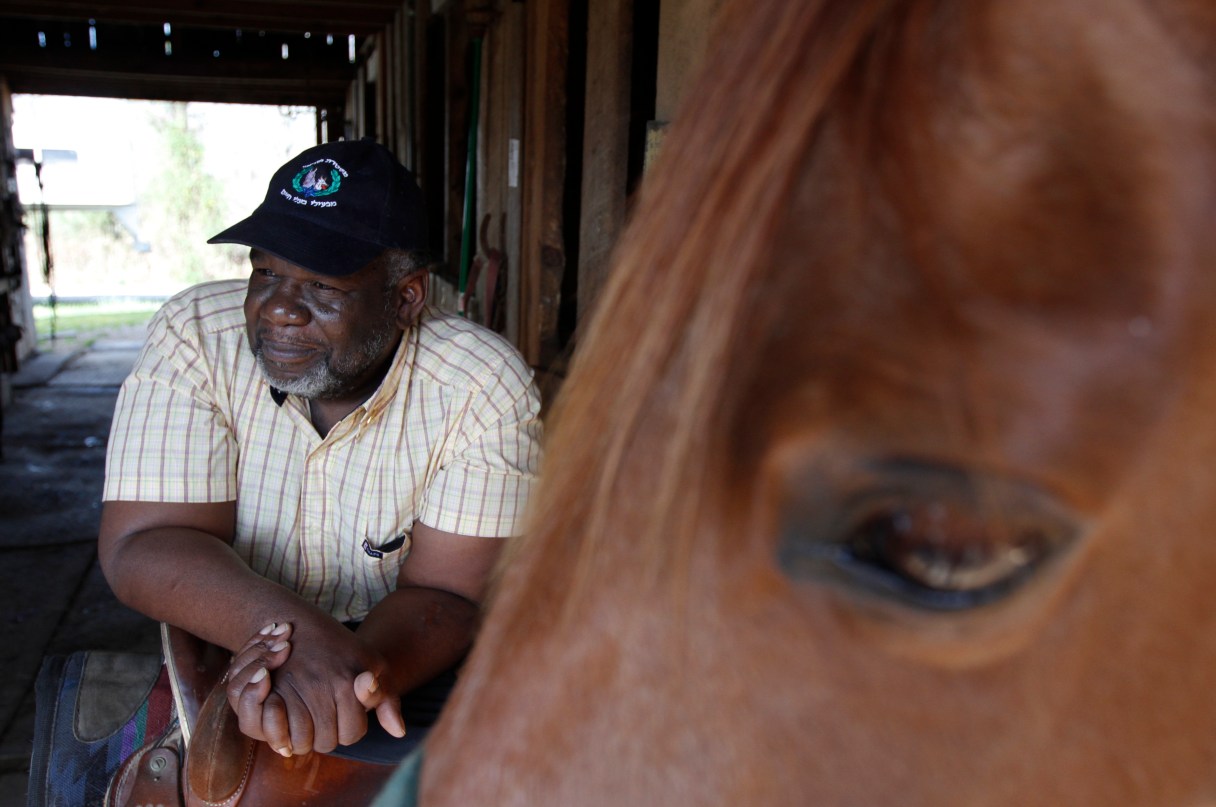
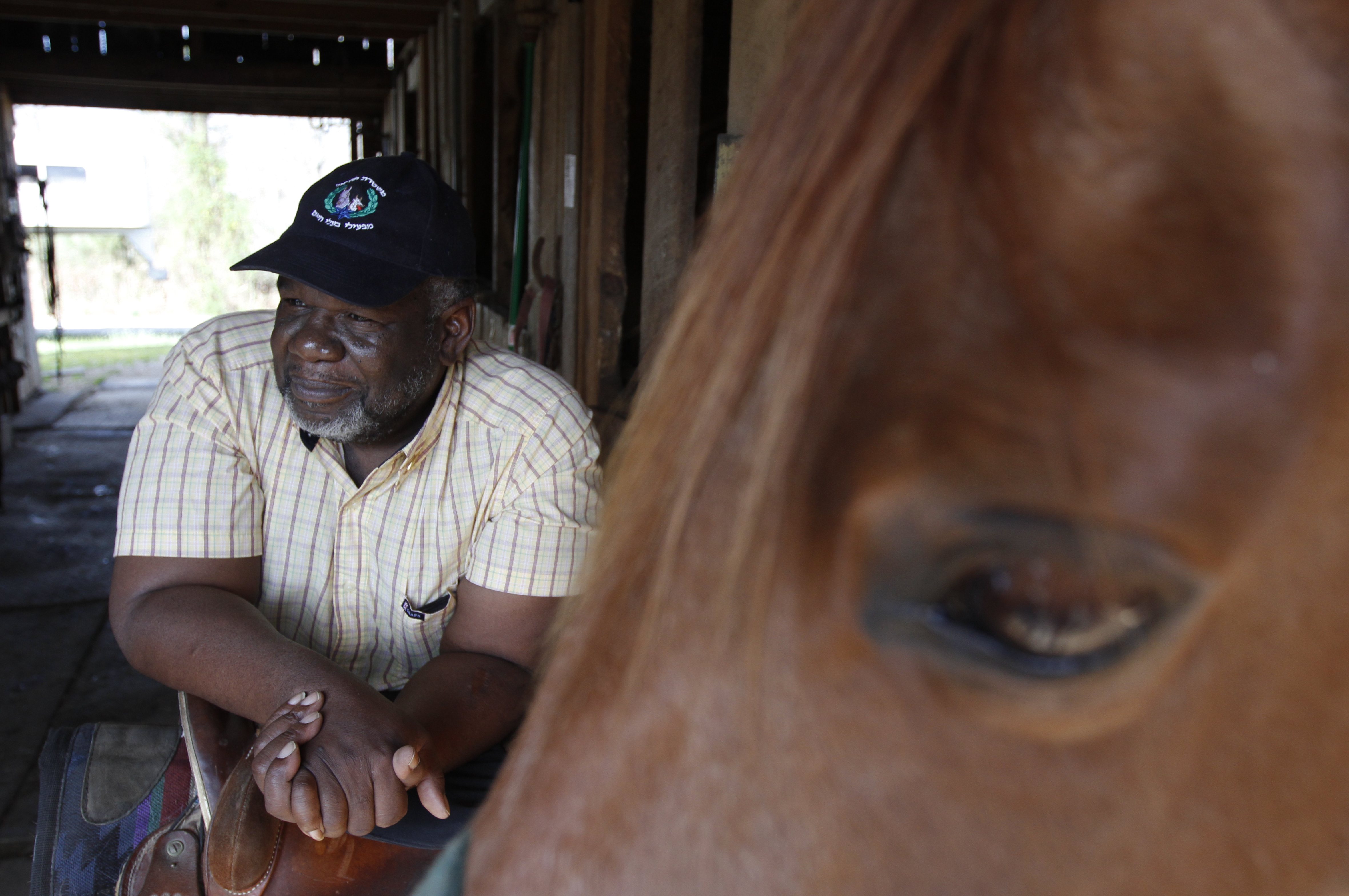
 Nathanael Jackson speak about alternatives to horse soring that give Tennessee Walking Horses their signature gait as his prize winning mare “Count It All Joy” peeks her head out of the stall at the Walkin on Ranch in Cookeville, Tenn., on May 14, 2012.

TENNESSEE WALKING HORSE HISTORYIn the mid- to late 1800s, farmers in the central basin of Tennessee developed, through selective breeding, a superior strain of saddle horse that was both an effective utility horse and a smooth-gaited mount.They crossbred horses that were readily available throughout the region – Standardbreds, Morgans, American and English Thoroughbreds, American Saddle Horses, and Canadian and Narragansett Pacers. It was a standardbred stallion named Allan that laid the foundation for what became the first breed of horse to bear a state name – the Tennessee Walking Horse.Though he possessed quality racing trotter bloodlines, Allan’s natural tendency was to pace. Regardless of the type of mare mated to him, the resulting offspring almost always performed an easy gliding gait capable of carrying a rider effortlessly across the farms and rural roads of middle Tennessee.In 1939, the first Tennessee Walking Horse National Celebration took place in Shelbyville, Tenn., and it remains today the breeder’s largest showcase and its world championship show. In terms of entries and spectators, the 11-day event is considered the largest such show in the world, drawing 250,000 spectators and more than 3,000 horses annually. The Tennessee Walking Horse became an officially recognized breed by the U.S. Department of Agriculture in 1950.Source: EquinePost.com
Federal criminal charges against a top trainer in the multimillion-dollar Tennessee walking horse industry have some asking whether current methods to halt abusive practices of “horse soring” are effective or if the entire sport needs an overhaul.
Jackie McConnell, 60, walked up the steps into Chattanooga federal court on Thursday, carrying with him decades of walking horse experience and the weight of a 52-count federal indictment that details allegations of horse abuse in the industry’s largest shows.
“I think it is a huge wake-up call for the industry. [McConnell] is a key player,” said Keith Dane, director of equine protection for the Humane Society of the United States.
Recent charges against McConnell and others, including the first convictions in two decades under the U.S. Horse Protection Act, have brought increased federal scrutiny to an industry in which some say abuse is rampant. Others contend that the practices are rare and that self-policing is cleaning up the horse shows.