
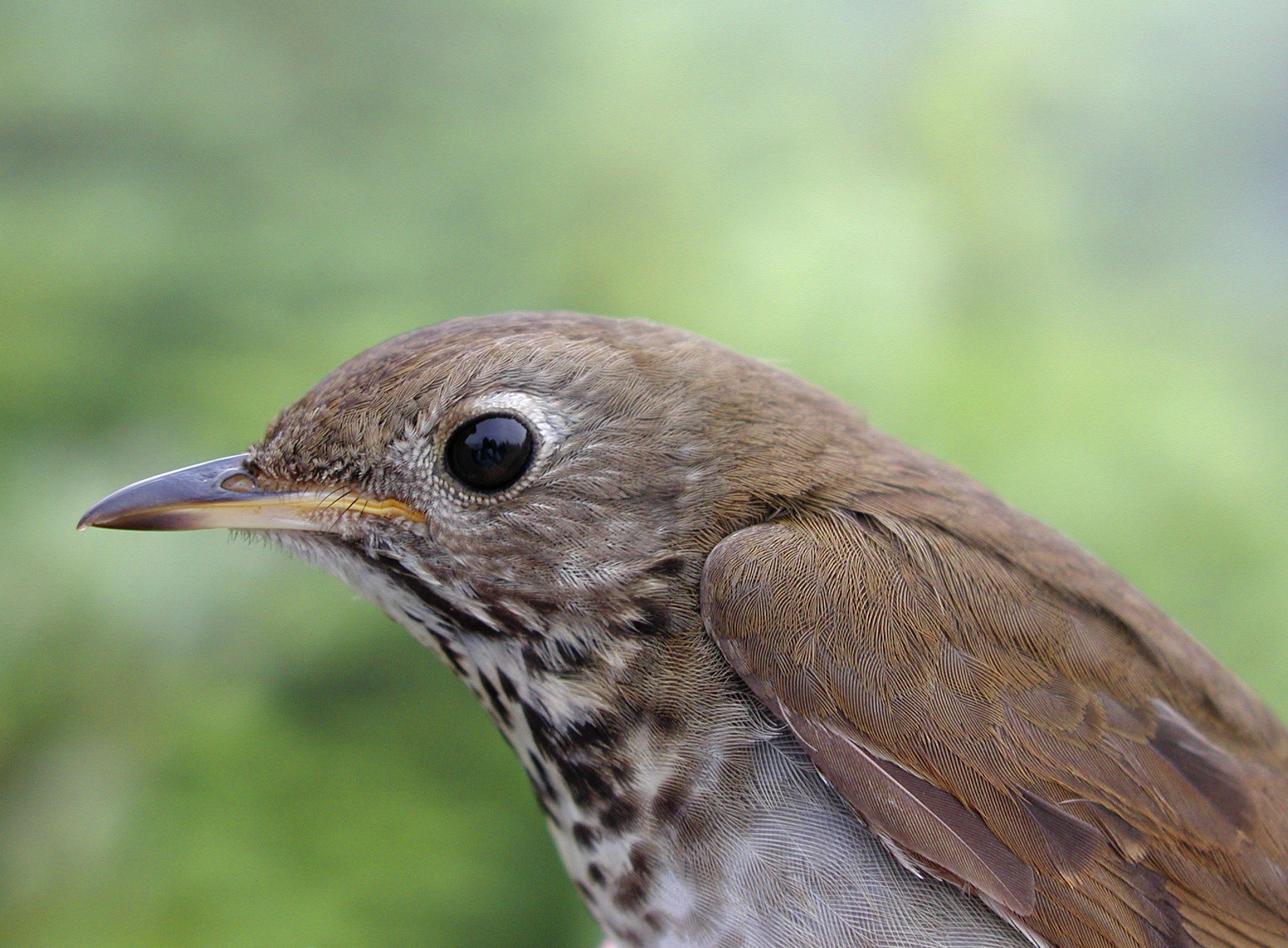
 A Bicknell’s thrush perches on East Mountain in East Haven, Vt. The songbird that wings its way each year from austere mountaintops of the northeastern U.S. to the steamy forests of the Caribbean has inspired the creation of what conservationists hope will be a new model for nature reserves in the Dominican Republic, a country that has long struggled with deforestation.
SAN FRANCISCO DE MACORIS, Dominican Republic – An elusive songbird that wings its way each year from austere mountaintops of the northeastern U.S. to the steamy forests of the Caribbean has inspired the creation of what conservationists hope will be a new model for nature reserves in a country that has long struggled with deforestation.
The reserve is taking shape in a lushly overgrown former cattle ranch measuring about 1,000 acres, at the edge of a deep green forest in the Dominican Republic’s rugged northeast. Conservation-minded Dominican and U.S. investors have acquired the plot as a pilot project, hoping to protect what they say is a global biodiversity hotspot that’s home to dozens of threatened species.
Tentatively known as the Reserva Privada Zorzal, the government sees the reserve as a potential example, showing that such land can be put to better uses than burning down the trees to convert it to pasture, a typical approach in this Caribbean country with only about 40 percent of its forest cover left. Neighboring Haiti, which shares the island of Hispaniola, has virtually none of its forest standing.
Jesus Moreno, a Dominican businessman whose family is partially funding the reserve, says the portion of the property where most of the trees have already been removed is well-suited to low-intensity, organic agriculture. He plans to grow macadamia trees and cacao, the raw material in chocolate, while allowing the forest to regenerate, in perpetuity, on three-fourths of the holding. The country’s environment minister is scheduled to inaugurate the reserve project on June 5.
“I am not trying to make this into a big business and make a lot of money,” said Moreno, whose family’s ventures also include a nursery that grows macadamia trees and the country’s only factory processing the nuts. “We are trying to create a model and break the cycle of destruction.”