
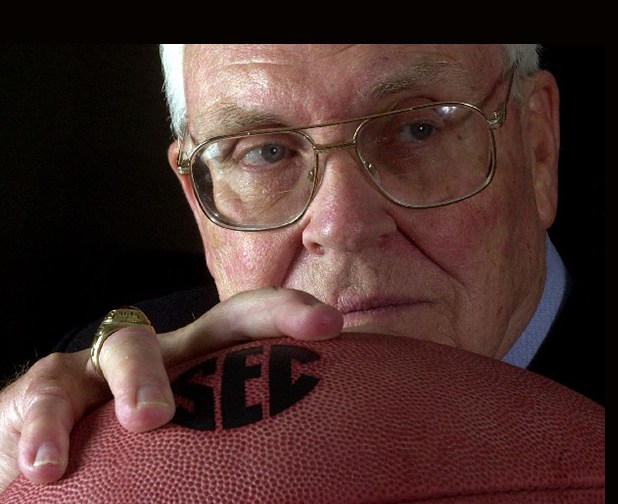

 AP photo / SEC commissioner Roy Kramer is pictured at the league’s headquarters in Birmingham, Ala., on June 6, 2000.
BCS ERA HIGHS AND LOWSTHE GOOD• 1. Following the 2005 regular season, No. 2 Texas topples No. 1 Southern Cal 41-38 in a memorable BCS title game. Had the BCS not been in place, USC would have been obligated to play the Big Ten champion in the Rose Bowl.• 2. Boise State from the Western Athletic Conference stuns Big 12 champion Oklahoma 43-42 in overtime at the Fiesta Bowl after the 2006 season in what may be the most exciting bowl game ever staged.• 3. Ohio State’s win over Miami after the 2002 season and Auburn’s win over Oregon after the 2010 season each was decided on the final play.THE BAD• 1. Southern Cal, Oklahoma and Auburn each go undefeated during the 2004 season. The Trojans and Sooners are ranked 1-2 all season, leaving Auburn as the odd team out.• 2. The 2003 season ends with LSU facing Oklahoma despite Oklahoma’s 35-7 loss to Kansas State in the Big 12 championship game. Southern Cal was No. 1 in both polls entering the bowls and finished atop the AP poll, with LSU winning the BCS title and the crystal ball.• 3. The Big East champion often was the ugly duckling among the BCS bowls. An 8-4 Connecticut sold less than 2,800 tickets out of a 17,500 allotment to the Fiesta Bowl after the 2010 season, saddling the school with a hit of just under $3 million. Those who traveled saw the Huskies lose to Oklahoma, 48-20.
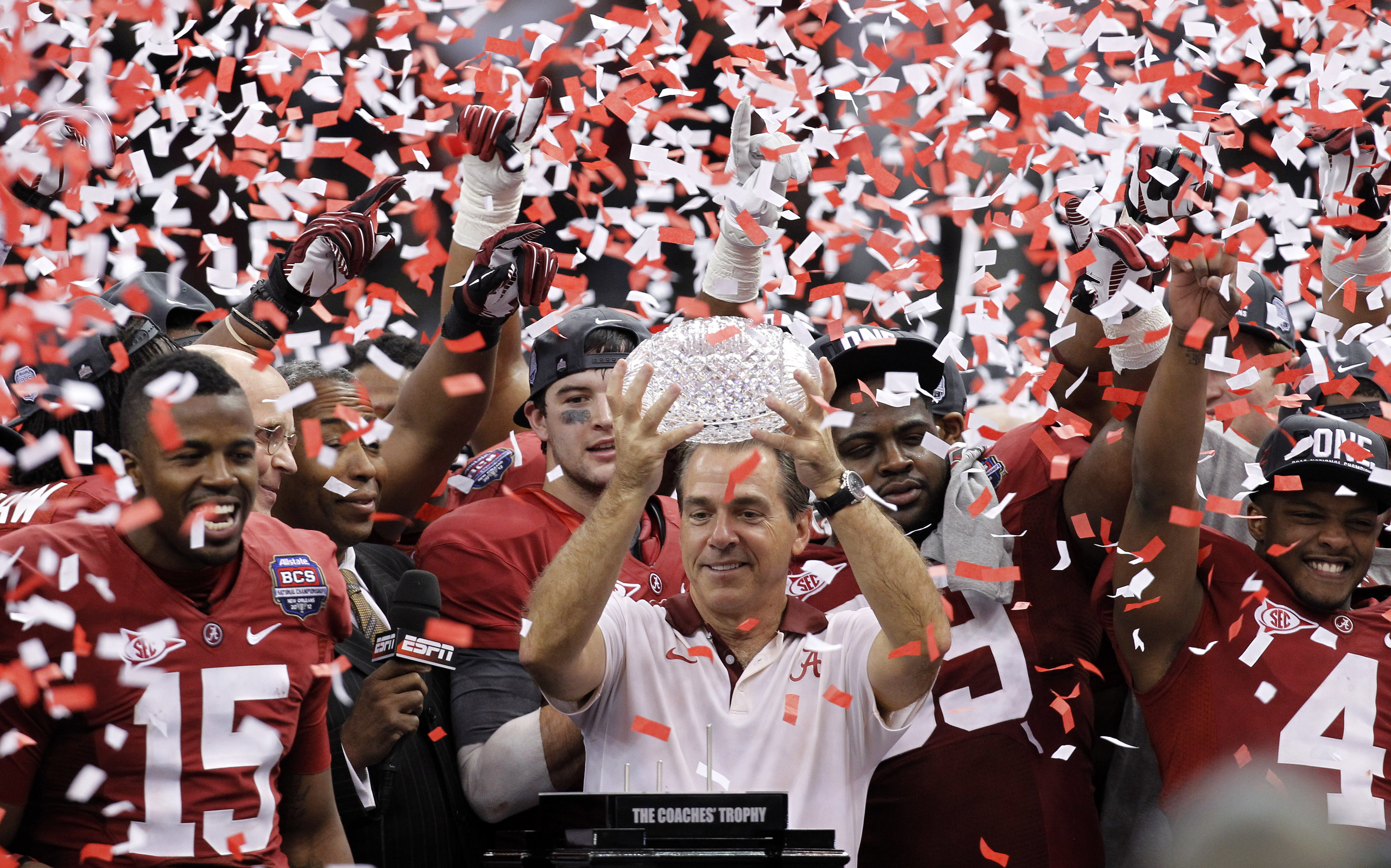 Alabama head coach Nick Saban celebrates with his team after the BCS National Championship college football game against LSU on Jan. 9, 2012, in New Orleans. Alabama won 21-0.
The Bowl Championship Series era in college football will be put to rest on the evening of Jan. 6, 2014, when No. 1 Florida State and No. 2 Auburn vie for the national title in Pasadena, Calif.
A system to pair the sport’s top two teams was birthed by former Southeastern Conference commissioner Roy Kramer and implemented before the 1998 season. The 16-year run had a smooth start and a smooth finish and some controversy in between, but its founder believes the BCS created far more good than bad for programs at all levels.
“Despite all the people who want to bash it, it did what it was supposed to do, and I think it worked rather well,” Kramer said Tuesday in a phone interview. “I’m probably a little prejudiced, but it did what we wanted. First and foremost, it increased the interest in college football, and it’s done that far beyond our dreams. I noticed a couple of weeks ago that the Auburn-Alabama game on television had Birmingham as its highest-rated city for viewership and that the third-highest was in Columbus, Ohio.
“That accentuates what we were talking about back then. It created more of a national interest in college football in a way that we probably didn’t even anticipate at the time.”