
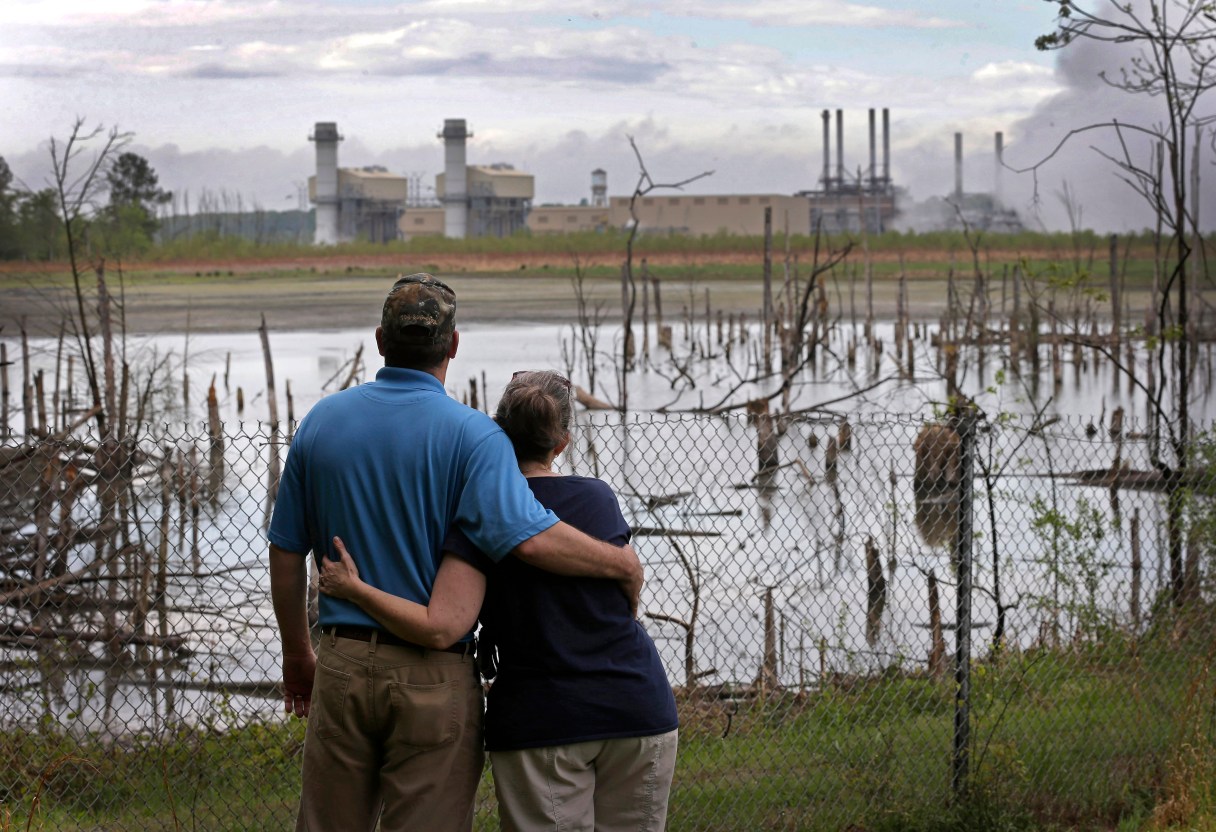
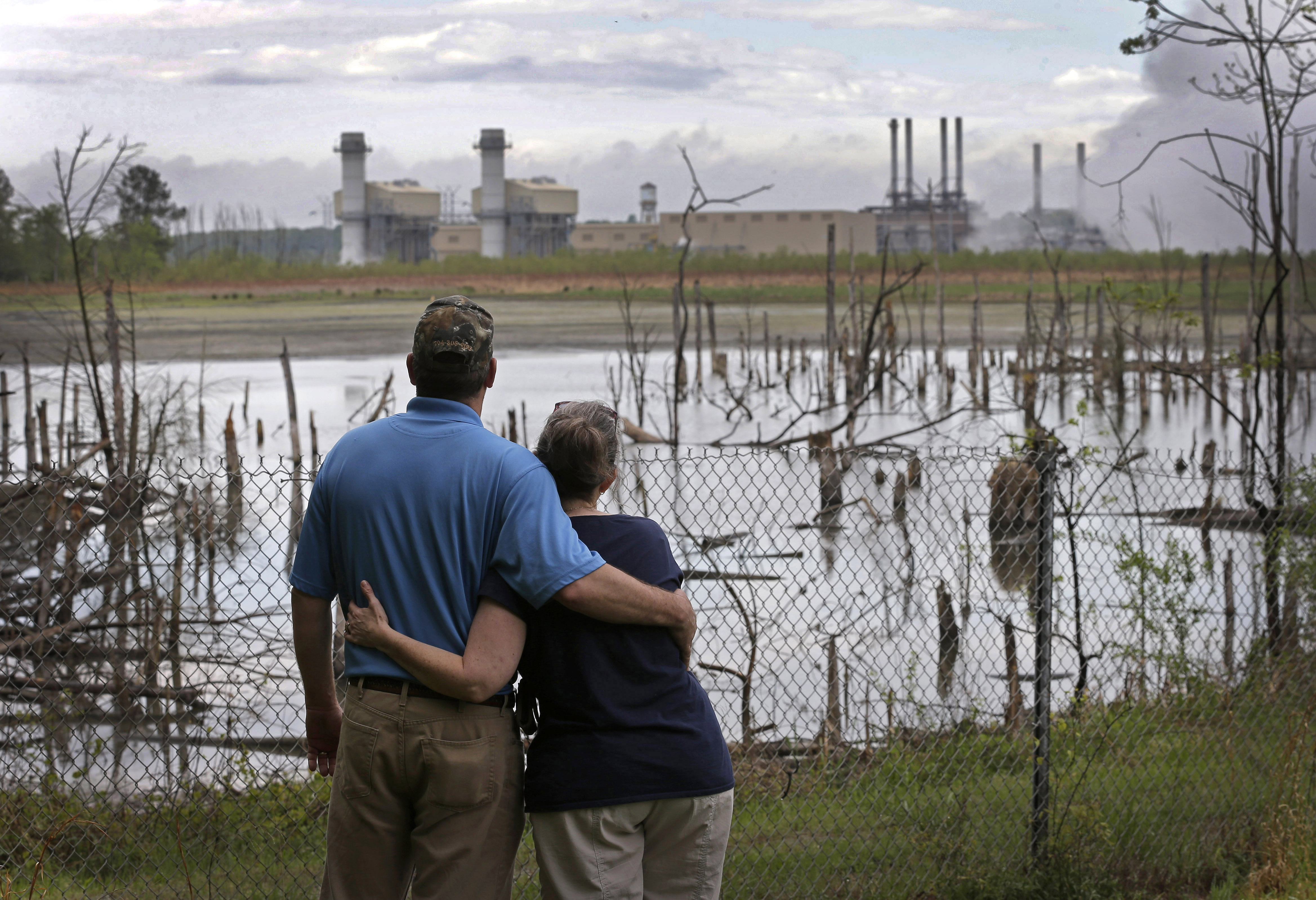
 In this April 25, 2014 photo, Bryant Gobble, left, hugs his wife, Sherry Gobble, right, as they look from their yard across an ash pond full of dead trees toward Duke Energy’s Buck Steam Station in Dukeville, N.C. Records obtained by The Associated Press show that Duke and North Carolina environmental regulators have known since 2011 that groundwater samples taken from monitoring wells near several homes in Dukeville contained substances, some that can be toxic, exceeding state standards.
DUKEVILLE, N.C. — The sweet tea served in the tidy kitchen of Joanne Thomas’ antebellum home comes with an ominous warning.
“It’s made with bottled water,” says Thomas, a spry 71-year-old. “But the ice comes from our well.”
For more than 80 years, the Thomas family has lived on a farm that abuts three pits containing 6.1 million tons of ash from the coal-fired boilers of Duke Energy’s Buck Steam Station. Built in 1926, the plant towers over the Yadkin River an hour’s drive from the Charlotte headquarters of the nation’s largest electricity company.
Since 2011, Duke and North Carolina environmental regulators have known that groundwater samples taken from monitoring wells near the Thomases’ home and others in Dukeville contained substances — some that can be toxic — exceeding state standards.
The state could have required Duke to implement a cleanup plan to prevent spreading contamination. That never happened, state regulators said, because they weren’t certain whether coal ash production was to blame or if the substances were naturally occurring.