

Thursday, October 29, 2026Oct 29

This story is exclusive to subscribers.

Tennessee ballot amendment could keep more people in jail before trial, group says

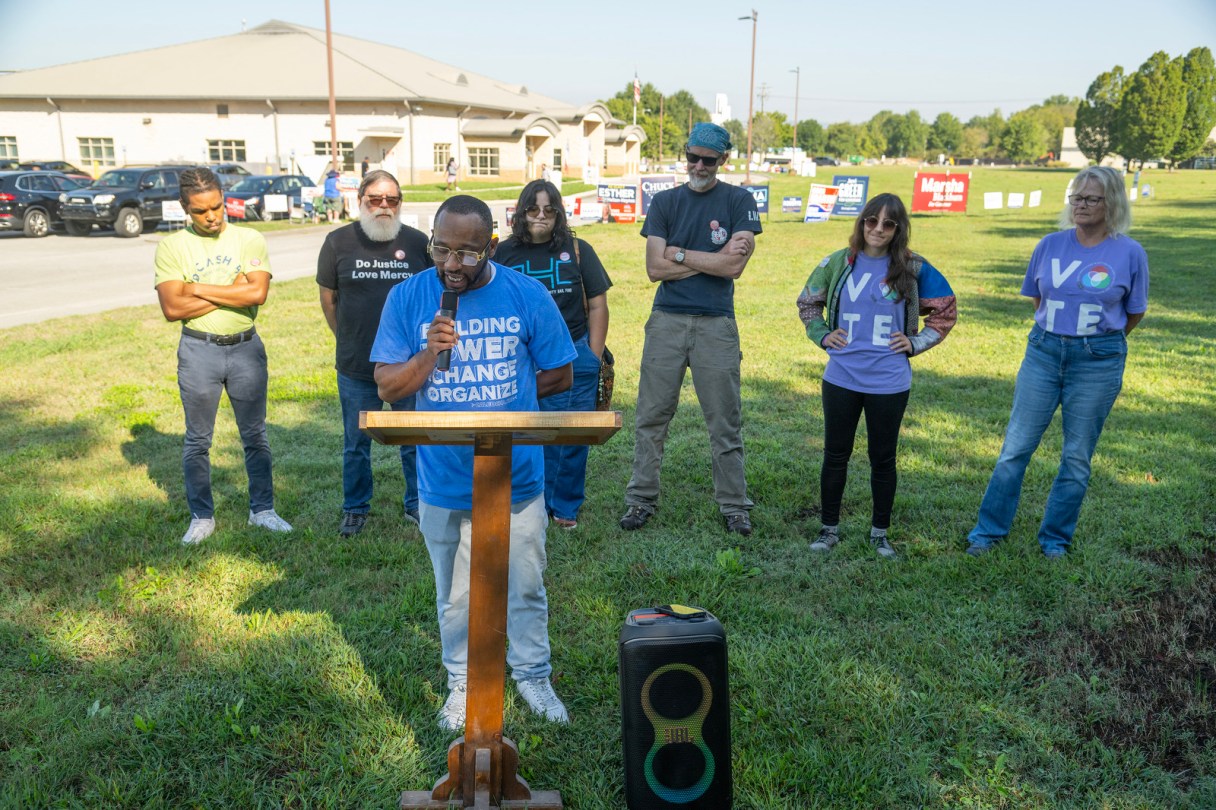
Staff Photo by Seth Carpenter / Allen Shropshire, an organizer with Chattanoogans in Action for Love Equality and Benevolence, speaks against Tennessee Amendment 1, which would expand the list of offenses for which judges can deny bail before trial. Shropshire spoke during early voting outside the Hamilton County Election Commission on Oct. 14, 2026.
Staff Photo by Seth Carpenter / Allen Shropshire, an organizer with Chattanoogans in Action for Love Equality and Benevolence, speaks against Tennessee Amendment 1, which would expand the list of offenses for which judges can deny bail before trial. Shropshire spoke during early voting outside the Hamilton County Election Commission on Oct. 14, 2026. Staff Photo by Seth Carpenter / Allen Shropshire, an organizer with Chattanoogans in Action for Love Equality and Benevolence, speaks against Tennessee Amendment 1, which would expand the list of offenses for which judges can deny bail before trial. Shropshire spoke during early voting outside the Hamilton County Election Commission on Oct. 14, 2026.

As early voting started in Tennessee on Wednesday, a local advocacy group is arguing that a proposed amendment on the ballot could lead to innocent people being jailed for months while awaiting trial.

Members of the group Chattanoogans in Action for Love, Equality and Benevolence — or CALEB — gathered outside the Hamilton County Election Commission off Amnicola Highway to oppose Amendment 1 to the Tennessee Constitution.

As it stands, the state constitution generally affords defendants the right to bail out of jail before trial except in capital cases in which they could receive the death penalty.

Amendment 1 would broaden the court’s ability to deny bail to those accused of a much broader scope of crimes, including terrorism, second-degree murder, aggravated rape and other crimes that require those convicted to serve a minimum of 85% of their sentence before release.

The amendment would not automatically deny bail for those accused of those offenses. If it passes, judges would be able to deny bail if “the proof is evident or the presumption great” and would have to put their reasons for granting or denying bail into the court record.