
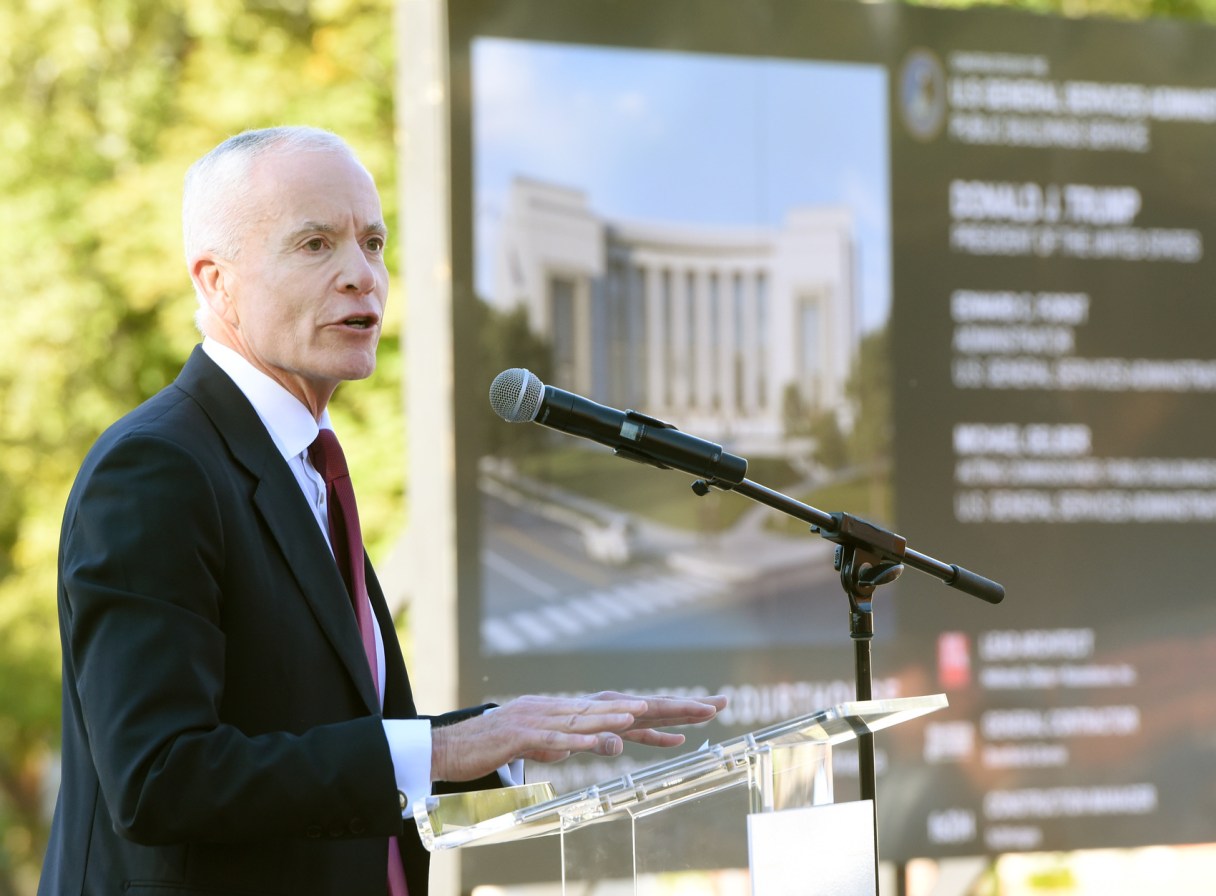

Officials broke ground Wednesday on a $283 million federal courthouse in downtown Chattanooga, calling the project a monument to the U.S. justice system and a masterpiece of classical architecture in line with an executive order from President Donald Trump.
The courthouse is set to be one of the most expensive construction projects in Chattanooga history. The construction budget does not include prior planning and design costs, which bring the total funding to $319 million, federal officials said at the ceremony.
The groundbreaking follows nearly 30 years of plans to replace the Joel W. Solomon Federal Building several blocks away and a debate between officials about the best location for a new courthouse.
“I’ve never been to Mount Sinai. I’ve never been to ancient Jericho,” Chief U.S. District Judge Travis McDonough, the city’s top federal judge, said at the ceremony. “But our long road to get here has revealed to me the reverence that Moses and Joshua must have felt for those places. The ground under our feet may not be holy, but like those faraway sites, this site will strengthen our faith — our faith in America, in our community and in the rule of law.”
The U.S. General Services Administration seized several acres on Vine Street from insurance company Unum in February over objections from Unum and several local and state officials. The federal government completed its acquisition of the block with a $4.1 million purchase in April.