
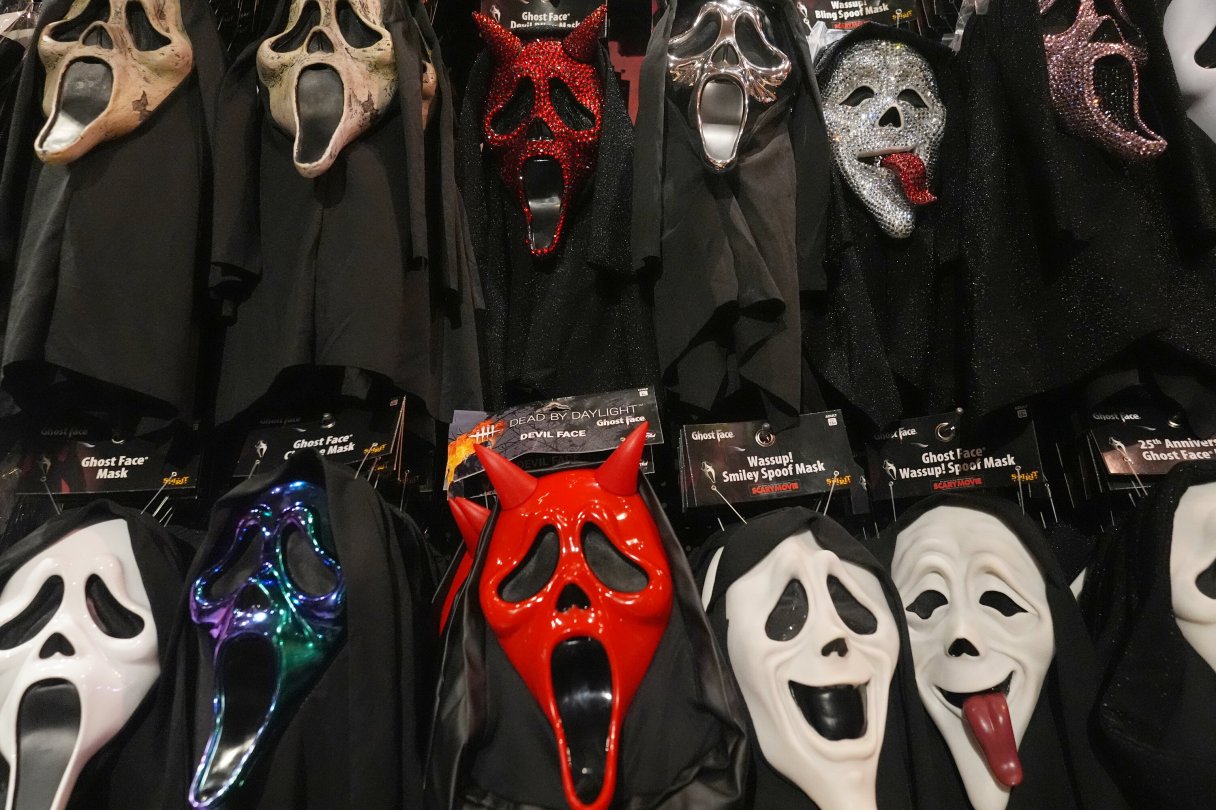
The contemporary American folk holiday of Halloween has been frightening the young folk, ringing the cash registers and generally influencing popular culture for nearly 200 years.
I know this because Hallmark — the greeting card folks — attributes present-day Halloween customs to Irish Catholics fleeing the potato famine in the 1840s. It seems costumes, jack-o-lanterns, going door-to-door to shake down your brethren and sistren, and dealing out (mostly) harmless tricks to those whose treats don’t pass muster are all, in fact, rooted in pagan Celtic harvest festivals replete with restless wandering spirits.
The use of disguise effectively insulates oneself from retribution by the living and dead. Anthropologists, sociologists and others put it all down to one last blowout before the cold, dark and interminably long northern European winter sets in for real, confining everyone to their hovels.
In modern times, any Freudian worth their inkblot test results will tell you donning a mask provides the perfect cover for showing everyone much more of your true self, no matter how antisocial, craven, degenerate, dangerous or just plain rotten said self may be.
That type of high disclosure equals high risk, so it’s best not to chintz out on your getup. After all, nobody wants to come out as a cheapskate, miser or skinflint on the one day of the year you can safely put the most primitive urges, instinctual drives, sketchy impulses and kinky desires of your psychological makeup on display for all to see.